Modern industrial facilities depend on complex equipment that must operate reliably for long periods while maintaining high levels of productivity and safety. Even when machinery appears to be functioning normally, internal problems can develop unnoticed and eventually lead to costly breakdowns. Identifying these hidden faults before they become serious is therefore an important part of effective maintenance management. Infrared thermography provides maintenance professionals with a practical, non-contact method for detecting unusual temperature patterns that may reveal developing equipment problems. Using specialized thermal imaging cameras, technicians can visualize heat across electrical and mechanical components and identify areas that differ from expected operating conditions. Because many faults generate excess heat as a result of electrical resistance, friction, poor connections, overloading, or inadequate lubrication, thermal patterns can provide valuable clues about equipment condition. When integrated into a broader maintenance program, infrared thermography can help organizations discover hidden problems, reduce unplanned downtime, improve safety, and make more informed decisions about repairs.
Detecting Electrical Problems Before Failure
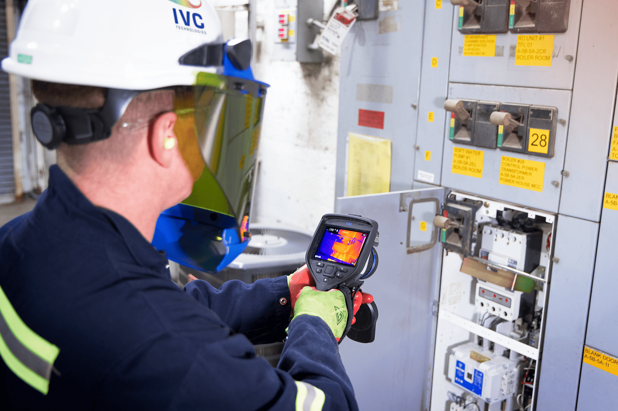
Electrical systems are particularly well suited to infrared thermography because many electrical faults produce localized increases in temperature. Loose connections, overloaded circuits, deteriorating components, unbalanced loads, and excessive electrical resistance can all generate heat that may not be visible during a conventional visual inspection. A thermal camera can scan electrical panels, switchgear, circuit breakers, transformers, cable connections, and other components while they are operating under normal conditions.
Instead of requiring technicians to dismantle equipment, thermography allows potentially problematic areas to be identified from a safe distance. A connection that appears visually intact may nevertheless produce an abnormal thermal signature because of increased resistance at the contact point. If the issue remains unresolved, continued heating can damage surrounding insulation and components and potentially contribute to an electrical fire or equipment failure.
See also: Traditional vs Infrared: Which Outdoor Sauna Suits You
Turning Thermal Images into Actionable Maintenance Data
The value of infrared thermography depends not only on capturing thermal images but also on interpreting them correctly. Temperature differences need to be considered in relation to equipment design, operating conditions, ambient temperature, load, airflow, and the characteristics of the materials being inspected. Modern infrared thermography can provide detailed temperature measurements and allow technicians to compare current images with historical records.
Establishing baseline thermal patterns for equipment makes it easier to identify meaningful changes over time. A component that consistently operates within a particular temperature range can be monitored for deviations that may signal deterioration. Thermal inspections can also be incorporated into computerized maintenance management systems, allowing identified issues to be documented, prioritized, and tracked through subsequent inspections.
Identifying Mechanical Issues Through Heat Patterns
Infrared thermography can also provide important information about the condition of mechanical equipment. Components such as bearings, motors, gearboxes, pumps, fans, compressors, and drive systems can generate abnormal heat when they experience excessive friction, misalignment, poor lubrication, mechanical overload, or other forms of deterioration.
A thermal camera can detect changes in surface temperature and reveal patterns that may indicate an underlying mechanical problem. For example, a bearing operating at a significantly higher temperature than comparable components may require further investigation, particularly if the temperature increases over time. Similarly, an unusually hot motor housing may indicate excessive load, ventilation problems, electrical issues, or mechanical stress.
Improving Safety, Efficiency, and Maintenance Planning
One of the major advantages of infrared thermography is that inspections can often be performed without physical contact with the equipment. This allows technicians to examine energized electrical systems and operating machinery while reducing the need for unnecessary access or disassembly. As a result, thermal inspections can support safer maintenance practices while also minimizing interruptions to production.
Detecting faults early can provide significant operational benefits because maintenance teams can address developing problems during planned shutdowns instead of dealing with unexpected failures. Early intervention can also reduce the likelihood of secondary damage, where one deteriorating component causes additional equipment to fail. Furthermore, identifying excessive heat caused by inefficient operation can help organizations address conditions that may increase energy consumption. Regular thermal surveys can therefore contribute to reliability, safety, efficiency, and cost management at the same time.
As industrial facilities continue to adopt predictive and data-driven maintenance strategies, infrared thermography will remain a valuable method for understanding equipment health. By finding thermal abnormalities before they develop into major failures, organizations can protect their assets, reduce downtime, improve safety, and extend the productive life of critical equipment.