
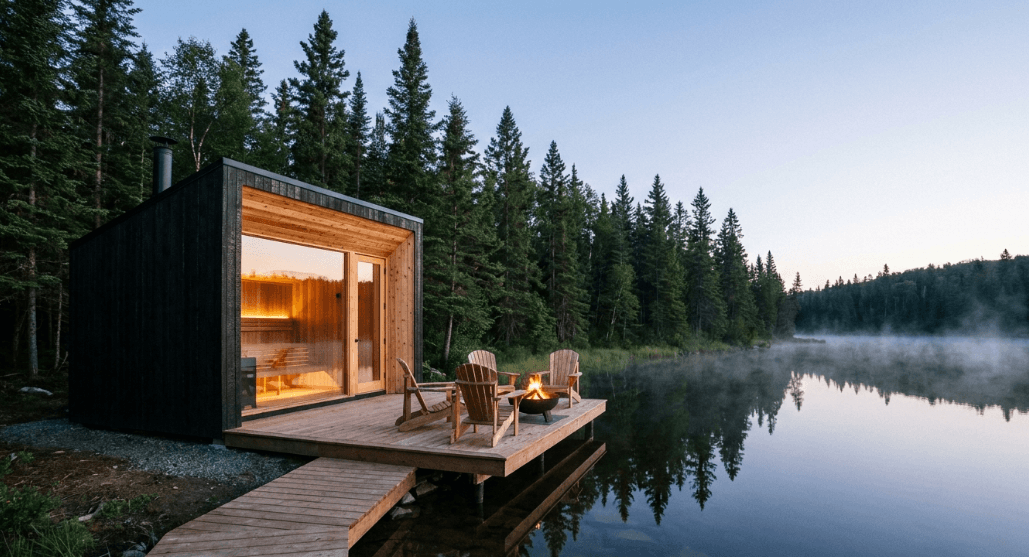
A traditional outdoor sauna with an electric heater typically costs $3,500 to $9,000 installed, including a dedicated 240V circuit that can add $500 to $1,200 on its own, and runs $3 to $8 in electricity per hour-long session. An infrared cabin usually costs $2,500 to $6,000, plugs into an existing 120V outlet with no electrical upgrade needed, and runs roughly $1 to $3 per session. The lower upfront and operating cost makes infrared the cheaper path overall, while traditional units heat faster and hold up better in genuinely cold outdoor climates.
What Does a Traditional Outdoor Unit Cost to Buy and Install?
A traditional electric-heater cabin sized for two to four people commonly runs $3,500 to $9,000 depending on wood species, cabin size, and heater output. Heaters rated 6kW and above, which most outdoor units in this size range need to reach and hold 170 to 200 degrees reliably, require a dedicated 240V circuit. That electrical work typically adds $500 to $1,200 depending on how far the run is from the panel and whether the yard already has adequate service nearby. Wood-fired traditional units skip the electrical cost entirely but add the ongoing expense and labor of sourcing dry firewood, generally $200 to $500 a year for regular use.
What Does an Infrared Outdoor Unit Cost to Buy and Install?
Infrared cabins generally run $2,500 to $6,000 for a comparable two- to four-person size, and most plug directly into a standard 120V outlet, which means no electrician visit in most residential setups. That alone commonly saves $500 to $1,200 compared with a traditional electric build. The heating panels themselves, carbon or ceramic, cost less to manufacture and install than a traditional heater and rock bed, which is most of where the lower purchase price comes from. The tradeoff is a lower operating temperature, generally 120 to 150 degrees, since infrared heats the body directly rather than heating the surrounding air to traditional sauna temperatures.
How Do Monthly Operating Costs Compare?
A traditional electric heater pulling 6 to 9kW for a typical 30- to 45-minute session costs roughly $3 to $8 per session depending on local electricity rates, adding up to $25 to $70 a month for regular three-times-a-week use. An infrared cabin, running on 1.5 to 2kW panels for a similar session length, costs closer to $1 to $3 per session, or $10 to $25 a month at the same frequency. Over a year, that gap can add up to $150 to $450 in electricity savings favoring infrared, though it is a smaller factor than the upfront purchase price difference for most buyers deciding between the two.
Which Type Handles Cold Outdoor Climates Better?
Traditional units generally win here. A heater built to push cabin air to 170 to 200 degrees recovers faster after the door opens and holds temperature more consistently once outdoor ambient temperatures drop well below freezing. Infrared units can take noticeably longer to feel effective in genuinely cold conditions since the panels are heating occupants directly rather than raising the surrounding air temperature, and a cold cabin interior absorbs some of that radiant heat before it reaches the body. For buyers in northern climates who plan on year-round use, this is often the deciding factor over the cost difference alone.
Which Option Makes More Sense for a First-Time Buyer?
For someone testing whether outdoor sauna ownership fits their routine, infrared’s lower purchase price and lower operating cost make it the easier way to start, particularly in climates that do not see extended hard freezes. For buyers who already know they want the traditional experience, higher heat, steam from water on rocks, and stronger cold-climate performance, the higher upfront and electrical cost is a reasonable tradeoff for a build that will hold up better through a real winter. Comparing current pricing across both types side by side, including current listings at Sweat Decks, is the fastest way to see how the cost gap plays out for a specific cabin size before committing to either heating style.
What Do Long-Term Repair and Replacement Costs Look Like?
A traditional heater’s rock bed needs replacing every one to two years, generally $30 to $80 a set, and the heating element itself typically lasts 8 to 12 years before needing replacement at $300 to $700 depending on wattage and brand. Infrared panels tend to last longer before failing outright, often 10 to 15 years, but a single failed panel on some models means replacing that whole panel rather than a simple rock swap, which can run $150 to $400 per panel depending on the system. Door seals wear out on both types at a similar rate, roughly two to four years, and cost about the same to replace regardless of heating style. Averaged over a decade of ownership, the two heating styles end up closer in total repair cost than the upfront price gap suggests, since infrared’s cheaper purchase price is partly offset by pricier individual panel replacements when something does fail.
Does Climate Change Which Option Makes More Financial Sense?
In a mild climate with a long outdoor season, infrared’s lower running cost compounds across more months of actual use, which widens its cost advantage over a traditional unit that spends part of the year barely used. In a climate with a real winter, a traditional heater’s faster recovery time and higher target temperature mean it gets used more consistently through the coldest months, which can make its higher operating cost worth paying if the alternative is an infrared unit that sits mostly idle once temperatures drop hard. Matching heating style to how many months a year the unit will realistically see regular use is a better way to run the numbers than comparing sticker price and per-session cost in isolation.
Frequently Asked Questions
Is a traditional or infrared outdoor sauna cheaper to buy? Infrared cabins are typically cheaper upfront, often several hundred to a couple thousand dollars less than a comparable traditional unit of the same size.
Which type costs less to run monthly? Infrared units generally cost less per session since they run on a standard 120V outlet and heat the body directly rather than heating the full cabin air.
Does a traditional outdoor sauna need special electrical work? Larger traditional heaters, generally 6kW and up, need a dedicated 240V circuit, which adds several hundred dollars compared with an infrared unit on an existing outlet.
Which type is better for cold-climate outdoor use? Traditional units generally recover heat faster in cold conditions, while infrared units can take longer to feel effective once temperatures drop well below freezing.
References
- Cardiovascular and Other Health Benefits of Sauna Bathing: A Review of the Evidence, Mayo Clinic Proceedings, 2018
- Clinical Effects of Regular Dry Sauna Bathing: A Systematic Review, Evidence-Based Complementary and Alternative Medicine, 2018
- Does the Combination of Finnish Sauna Bathing and Other Lifestyle Factors Confer Additional Health Benefits? A Review of the Evidence, Mayo Clinic Proceedings, 2023
